

Local SEO · 29 min read
Why Marlboro College-area businesses lost web traffic (and how to rebuild for new audiences)
When Marlboro College closed in 2020, local businesses lost a predictable customer base and the search traffic that came with it. Here's how to pivot your digital strategy to reach the travelers, second-home owners, and new residents who replaced students.
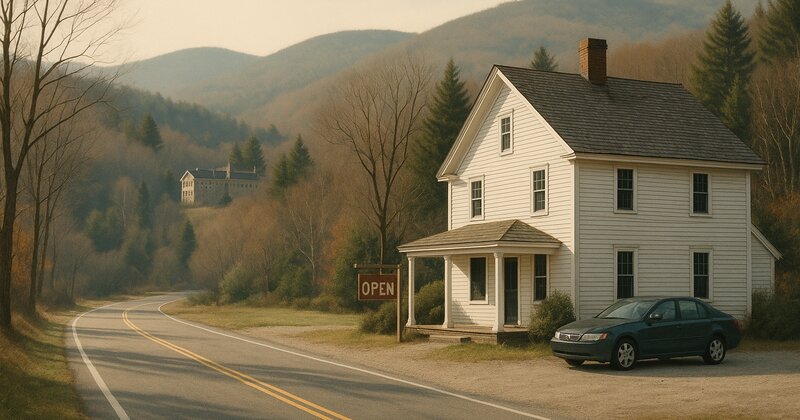
Here is a hypothetical, but a familiar one. Say a Marlboro restaurant owner sat at her kitchen table one evening and opened Google Analytics. She filtered the date range to March 2019 (the last full spring semester before Marlboro College announced its closure) and compared it to March 2024. March 2019: 420 website visits. March 2024: 180 website visits. A 57% drop. She knew foot traffic had declined after the college closed in 2020, but she had not looked at the web traffic numbers in years. The decline was steeper than she expected.
She scrolled through the traffic sources. In March 2019, the top search queries driving traffic to her site were "restaurant near Marlboro College," "where to eat in Marlboro VT," "pizza delivery Marlboro College," and "restaurants open late Marlboro Vermont" (students Googling at 9pm on a Thursday looking for food). In March 2024, those queries had disappeared. The top search queries were now "restaurant southern Vermont," "dining Brattleboro area," and "where to eat near Route 9" (generic, low-intent, high-competition queries that her site ranked poorly for). The students were gone. The search behavior had changed. Her website had not.
She had built the site in 2017 when Marlboro College was thriving (enrollment around 150, stable faculty and staff population, predictable semester rhythm). The site was optimized for students and college visitors: homepage mentioned "convenient to Marlboro College campus," hours emphasized late-night availability (open until 10pm Thursday through Saturday to serve students), menu included college-friendly pricing ($8 to $14 entrees, $12 pizza, $6 sandwiches), and the contact page mentioned student discounts and catering for campus events. The site was perfectly tuned for the college audience. And when the college closed, the site became obsolete.
Marlboro College closed in May 2020 (merging with Emerson College in Boston, ending 75 years of operation in Marlboro). The closure was gradual (announced in 2019, final classes in spring 2020), but the impact on local businesses was immediate. Restaurants lost weekday lunch traffic (students, faculty, staff eating off-campus). Shops lost browsers and impulse buyers (students picking up supplies, gifts, coffee between classes). Lodging lost family weekend traffic (parents visiting during fall and spring, graduation weekends, admitted-student visit days). Gas stations lost daily commuters (faculty and staff driving from Brattleboro, Keene, Greenfield). And every business lost the search traffic that came with 150 to 200 people Googling "near Marlboro College" or "Marlboro VT" multiple times per week.
The Marlboro restaurant owner estimated she had lost $40,000 to $60,000 in annual revenue between 2019 and 2024 (comparing annual revenue pre-closure to post-closure, accounting for seasonal variation and the 2020-2021 pandemic disruption). Some of that loss was inevitable (fewer people in town = fewer potential customers). But some of it was recoverable if she pivoted her digital strategy. The college was gone, but new audiences had moved in. Second-home owners were buying former faculty homes and renovated farmhouses. Remote workers moved to southern Vermont during the pandemic and stayed. Retirees came for the rural character and a lower cost of living than Boston or New York suburbs. Route 9 travelers pass through too: Marlboro sits on Route 9, the main east-west route between Brattleboro and Keene, New Hampshire, which carries tourists, leaf-peepers and skiers heading to southern Vermont mountains. These audiences were searching online, but they were not searching "restaurant near Marlboro College." They were searching "restaurant Route 9 Vermont," "where to eat between Brattleboro and Keene," "dining southern Vermont," and "farm-to-table restaurants Windham County." Her site did not rank for any of these queries.
This post explains why Marlboro-area businesses (restaurants, lodging, shops, services within five miles of the former Marlboro College campus) lost web traffic after the college closed. It covers what the new audiences are searching for and how their search behavior differs from the college audience. It shows how to audit your site for outdated college-focused language and replace it with audience-relevant content. It lists the schema markup and Google Business Profile changes that help you rank for Route 9 corridor searches and second-home owner queries. Finally, it explains how to get cited by AI tools (ChatGPT, Perplexity, Google AI Overviews) when the new audiences ask where to eat, stay or shop in southern Vermont.
Why the college closure killed your search traffic (even if foot traffic only dropped 30% to 40%)
When Marlboro College closed, local businesses lost more than customers. They lost search volume, search intent, and keyword relevance. Here is what changed:
The "Marlboro College" keyword disappeared (and it was your highest-intent, lowest-competition keyword)
Before the closure, "Marlboro College" was a high-value keyword. Students, parents, prospective students, visiting scholars, and campus event attendees Googled "restaurant near Marlboro College," "lodging Marlboro College," "coffee Marlboro College," "gas station Marlboro College." These searches had clear intent (the searcher was on or near campus and needed something nearby) and low competition (only Marlboro-area businesses ranked for these queries, not Brattleboro or Keene businesses fifteen miles away).
If your website or Google Business Profile mentioned "Marlboro College" or "convenient to campus," you were well placed for these searches, because few other businesses competed for them. A Marlboro restaurant that said "5 minutes from Marlboro College campus" on its homepage was exactly what a student or visitor on a phone was looking for when deciding where to eat.
After the closure, far fewer people search for anything near Marlboro College: mostly alumni, people searching out of habit, or people who have not heard the college closed. A top ranking for a search almost nobody makes is worth very little, which is why traffic can fall even when the ranking has not changed. Google's free Keyword Planner will show you the rough search volume for any phrase, so you can check this yourself.
Here is a hypothetical example. Say a Marlboro cafe ranked first for "coffee Marlboro College" in 2019. The query drove 10 to 15 site visits per month and 8 to 12 customers per month (students stopping by before or after class). In 2024, the query drove 1 to 2 site visits per month and zero customers (the few people searching were not in Marlboro or were searching out of curiosity, not intent). The cafe's homepage still mentioned "steps from Marlboro College" in 2024. The cafe owner had not updated the site since 2018. The mention was now irrelevant and made the site look outdated (visitors saw "steps from Marlboro College," Googled "is Marlboro College still open," found out it closed in 2020, and assumed the cafe might also be closed or outdated).
Your site lost topical relevance for the new audiences (second-home owners, Route 9 travelers, remote workers)
The college audience searched with college-specific intent: "near campus," "student discounts," "late-night delivery," "catering for campus events." Your site was optimized for this intent. You mentioned the college, student-friendly pricing, hours that matched the academic calendar (open late during the semester, reduced hours during breaks).
The new audiences search with different intent:
- Second-home owners search for "restaurants southern Vermont," "farm-to-table dining Windham County," "where locals eat in Marlboro area," "best brunch near Brattleboro." They care about quality, local sourcing, atmosphere (they are not price-sensitive like students, they are looking for a weekend experience, not a quick meal).
- Route 9 travelers search for "restaurant Route 9 Vermont," "where to eat between Brattleboro and Keene," "lunch stop southern Vermont," "scenic dining Route 9." They care about convenience (easy access from Route 9, parking, quick service or takeout options), not proximity to a campus that no longer exists.
- Remote workers and retirees search for "coffee shop Marlboro VT," "quiet restaurant southern Vermont," "local businesses Marlboro," "dining Windham County." They care about community (supporting local businesses, meeting neighbors, finding regular spots), not student discounts or late-night hours.
If your site still mentions the college and student-focused offerings, it is irrelevant to these audiences. They see "convenient to Marlboro College campus" and think "this site is outdated" or "this business might be closed." They see "student discounts" and think "this is not for me." They bounce and search for a business with content that speaks to them.
Here is a hypothetical example. Say a Marlboro inn had a homepage (built in 2016, not updated since) that said: "comfortable lodging near Marlboro College, ideal for visiting families, graduation weekends, and admitted-student events. Special rates for college guests." In 2024, the inn owner Googled "lodging southern Vermont" and found her site ranked fifteenth (below inns in Brattleboro, West Dover and Newfane). She Googled "inn Route 9 Vermont" and did not find her site in the top twenty results. She asked ChatGPT "where should I stay in southern Vermont for a quiet weekend" and her inn was not cited (ChatGPT recommended inns in Grafton, Newfane, and Townshend with content about rural retreats and fall foliage).
The inn owner realized the homepage content was driving away the new audience. A second-home owner or remote worker reading "ideal for visiting families and graduation weekends" assumed the inn catered to a college crowd that no longer existed. The language signaled "outdated" and "not relevant to me." The inn owner rewrote the homepage in early 2025: "quiet country inn on Route 9 in Marlboro, Vermont. Surrounded by rolling hills and hiking trails, our inn is a peaceful retreat for southern Vermont weekends and remote work getaways, and for fall foliage stays. Five rooms, farm-to-table breakfast included, dog-friendly. Fifteen minutes from Brattleboro, ten minutes from the Hogback Mountain scenic overlook." No mention of the college. New focus: rural character, Route 9 location, second-home owner and remote worker appeal.
Then test it. A month or two after the rewrite, search "lodging Route 9 Vermont" again, ask ChatGPT "where should I stay on Route 9 in southern Vermont," and compare inquiries before and after. There is no guarantee of a ranking or an AI citation, but the new content at least speaks to the people who are actually searching and visiting now.
The geographic focus shifted from "Marlboro College" to "Route 9" and "southern Vermont"
Before the closure, Marlboro-area businesses could rely on hyper-local search intent. Searchers Googled "Marlboro College" or "Marlboro VT," and Google returned results within a two-mile radius of campus. Competition was minimal (only businesses in Marlboro village or within a few miles of campus ranked).
After the closure, the geographic focus broadened. Searchers now Google "southern Vermont" (too broad, high competition, businesses in Brattleboro, Bennington, Manchester compete) or "Route 9" (corridor search, businesses along the entire Route 9 stretch from Brattleboro to the New Hampshire border compete). Your Marlboro business now competes with businesses ten to twenty miles away (Brattleboro restaurants, West Dover lodges, Wilmington shops). If your site only mentions "Marlboro VT" and does not mention Route 9, southern Vermont, or corridor positioning (between Brattleboro and Keene), you lose to competitors with stronger corridor signals.
Here is a hypothetical example. Say a Marlboro coffee shop ranked first for "coffee Marlboro VT" in 2019 and 2024 (strong town-name SEO). But "coffee Marlboro VT" only had 10 to 15 searches per month in 2024 (down from 30 to 40 in 2019). The shop Googled "coffee Route 9 Vermont" and ranked twelfth (below coffee shops in Brattleboro and Wilmington). The shop Googled "coffee between Brattleboro and Keene" and did not appear in the top twenty results.
The shop owner updated the homepage to add Route 9 and corridor language: "locally roasted coffee in Marlboro, Vermont, on scenic Route 9. Convenient stop between Brattleboro and Keene, NH. Open daily 7am to 3pm. Espresso, pour-over, pastries, sandwiches. Outdoor seating with mountain views." The shop also added schema with areaServed: "Route 9 corridor between Brattleboro, VT and Keene, NH" and geo coordinates.
A few weeks after an update like this, run the same searches and ask Perplexity "where can I get good coffee on Route 9 in Vermont," then compare site visits and weekday customers with the month before. Results vary from business to business, and the season moves the numbers too, so compare like with like.
What the new audiences are searching for (and how to audit your site for outdated college language)
The new Marlboro-area audiences (second-home owners, Route 9 travelers, remote workers, retirees) search differently than the college audience. Here is what they search for and how to audit your site for outdated language that is costing you traffic.
Second-home owners search for quality, local character, and "where locals go"
Second-home owners (mostly from Boston, New York, Connecticut, buying renovated farmhouses or former faculty homes in Marlboro, Guilford, Halifax, Whitingham) search for restaurants, shops, and services that offer quality and local character. They are not price-sensitive (they have disposable income, they want a good experience, not a cheap meal). They search for:
- "farm-to-table restaurant southern Vermont"
- "best brunch Windham County"
- "where do locals eat in Marlboro area"
- "local shops southern Vermont"
- "craft breweries near Brattleboro"
- "hiking trails and restaurants Marlboro VT"
They want content that signals quality (farm-to-table, locally sourced, chef-driven, craft) and local character (family-owned, been here X years, community gathering place). They also look for authenticity (where locals go, not tourist traps). If your site mentions student discounts, late-night hours, or budget pricing, you signal "not for me" to this audience.
Audit your site: Search your homepage, about page, and menu/services pages for these words and phrases:
- "Marlboro College" or "campus" (remove or replace)
- "student discount" or "college ID" (remove)
- "late-night delivery" or "open until midnight" (remove or reframe: if you are still open late, say "late-night dining for night owls" instead of "late-night delivery for students")
- "budget-friendly" or "cheap eats" (remove or replace with "great value" or just remove the price mention entirely)
- "convenient to campus" (remove or replace with "on Route 9" or "in the heart of Marlboro village")
Replace outdated language with second-home owner appeal:
- "Farm-to-table dining in Marlboro, Vermont, using ingredients from local farms in Guilford, Halifax, and Windham County."
- "Family-owned restaurant serving southern Vermont since 2005. Where locals gather for Sunday brunch and weeknight dinners."
- "Seasonal menu featuring Vermont beef, heritage pork, and vegetables from our kitchen garden."
- "Cozy atmosphere with mountain views, outdoor seating in summer, wood-fired hearth in winter."
Here is a hypothetical example. Say a Marlboro restaurant cut the "convenient to Marlboro College" line and its student discounts from the homepage, replacing them with: "Marlboro's gathering place since 2008. Farm-to-table menu, local ingredients, seasonal specials. On Route 9 in the heart of the village, with outdoor seating and mountain views. Open Wednesday through Sunday for lunch and dinner." The restaurant also updated the about page to emphasize local sourcing (it named three farms it buys from, all within ten miles). It also stressed community connection (local music nights and donations to Marlboro Fire Department fundraisers).
A month or two later, search "farm-to-table restaurant southern Vermont," ask ChatGPT "where should I eat in southern Vermont if I want local, seasonal food," and keep a simple count of first-time customers who mention how they found you. That count is the honest measure of whether the new wording is working.
Route 9 travelers search for convenience, scenic stops, and corridor positioning
Route 9 is the main east-west route through southern Vermont, connecting Brattleboro (on the Vermont-Massachusetts border) to Bennington (on the Vermont-New York border) via Marlboro, Wilmington, and Woodford. Traffic volume is moderate (3,000 to 5,000 vehicles per day on the Brattleboro-to-Wilmington segment, Vermont Agency of Transportation data). A significant portion of this traffic is tourists and travelers (leaf-peepers in fall, skiers in winter heading to Mount Snow or Stratton, summer tourists exploring southern Vermont).
Route 9 travelers search for:
- "restaurant Route 9 Vermont"
- "where to eat between Brattleboro and Wilmington"
- "coffee stop Route 9"
- "scenic restaurants southern Vermont"
- "lunch on the way to Mount Snow"
- "lodging Route 9 Vermont"
They want convenience (easy to find from Route 9, parking, quick service or takeout), scenic appeal (mountain views, outdoor seating, charming village setting), and corridor positioning (they think in terms of Route 9 endpoints (Brattleboro, Wilmington, Bennington, Keene), not town names like Marlboro or Guilford).
Audit your site: Does your homepage mention Route 9? Does it mention corridor positioning (between Brattleboro and Wilmington, or between Brattleboro and Keene)? Does it mention scenic appeal or mountain views if you have them? If not, you are invisible to Route 9 travelers.
Add Route 9 corridor language to your homepage (in the first or second paragraph, where Google and visitors see it immediately):
- "Located on Route 9 in Marlboro, Vermont, between Brattleboro and Wilmington."
- "Scenic stop on Route 9, with outdoor seating and views of the Green Mountains."
- "Convenient Route 9 location, fifteen minutes west of Brattleboro, twenty minutes east of Wilmington."
- "On the way to Mount Snow or Stratton? Stop in Marlboro for farm-to-table lunch and Vermont craft beer."
Add Route 9 mentions to your schema (areaServed: "Route 9 corridor between Brattleboro and Wilmington" or "southern Vermont Route 9") and your Google Business Profile description (first sentence: "located on Route 9 in Marlboro, convenient stop between Brattleboro and Wilmington").
Here is a hypothetical example. Say a Marlboro cafe added Route 9 language to its homepage in early 2025: "coffee and pastries on Route 9 in Marlboro, Vermont. Scenic outdoor seating with mountain views. Convenient stop between Brattleboro (15 minutes east) and Wilmington (20 minutes west). Locally roasted coffee, house-made pastries, breakfast sandwiches. Open daily 7am to 3pm." The cafe also updated its Google Business Profile description: "Located on Route 9 in Marlboro, VT, we're a convenient coffee stop between Brattleboro and Wilmington. Outdoor seating, mountain views, locally roasted beans."
A few weeks later, search "coffee Route 9 Vermont" again and ask Perplexity "where should I stop for coffee between Brattleboro and Wilmington." If you track weekend customers, remember that spring brings tourists back on its own, so any change in foot traffic is part season and part visibility.
Remote workers and retirees search for community, quiet, and "local businesses"
Remote workers (people who moved to southern Vermont during or after the pandemic and work for out-of-state employers) and retirees (downsizing from Boston, New York or Hartford for lower costs and rural character) search for:
- "coffee shop Marlboro VT"
- "local businesses southern Vermont"
- "quiet restaurant Marlboro area"
- "where to meet people in southern Vermont"
- "community gathering places Windham County"
- "best local coffee Brattleboro area"
They care about community (supporting local businesses, meeting neighbors, finding regular spots), quiet and low-key atmosphere (not touristy, not loud, not rushed), and authenticity (businesses that have been around, family-owned, locally loved). They are more likely to search by town name ("Marlboro VT," "Guilford VT") than corridor ("Route 9") because they live here (they are not passing through).
Audit your site: Does your content signal community and local character? Do you mention how long you have been in business? Do you mention local ownership or family operation? Do you mention being a gathering place or regular spot for locals?
Add community-focused language:
- "Marlboro's neighborhood coffee shop since 2012. Where locals gather for morning coffee, afternoon work sessions, and weekend meetups."
- "Family-owned and operated. We live here and our kids go to school here. We are proud to serve our community."
- "Quiet, welcoming atmosphere. Great for remote work (free WiFi, plenty of outlets), reading, or catching up with friends."
- "Supporting local farms and producers. Our coffee is roasted in Brattleboro, our pastries use flour from a Vermont mill, our eggs come from a farm in Guilford."
Here is a hypothetical example. Say a Marlboro general store updated its homepage from "serving Marlboro College students and residents since 1998" to "Marlboro's community hub since 1998. Locally owned, serving neighbors and visitors with groceries, prepared foods, coffee, and local products. Gathering place for locals, travelers, and everyone in between. On Route 9 in the center of the village." The store also added a community page listing local events the store supported (Marlboro Music Festival volunteers stop here for supplies, store sponsors the town's July 4th parade, donations to the elementary school fundraiser).
Then check two kinds of search: the town-name search ("general store Marlboro VT"), where a store like this usually already does well, and the broader one ("local businesses southern Vermont"), where the new community wording is meant to help. Asking ChatGPT "what are some good local businesses to support in southern Vermont" is a quick way to see whether it picks up the new language. Counting new customers who say they just moved here or are visiting gives you a rough before-and-after measure.
How to optimize your Google Business Profile for the post-college audience (and get cited by AI)
Your Google Business Profile is as important as your website for local search and AI citations. Here is what to update:
Rewrite your business description to remove college mentions and add Route 9, corridor, or community language
Most Marlboro-area businesses have Google Business Profile descriptions written in 2015 to 2019 (when the college was thriving). These descriptions mention the college, student discounts, or campus proximity. In 2024 and beyond, this language is outdated and irrelevant.
Old description (Marlboro restaurant, written 2017):
Family restaurant near Marlboro College. Pizza, pasta, sandwiches, salads. Student discounts available. Open late for late-night delivery. Catering for campus events.
New description (rewritten 2025):
Family restaurant in Marlboro, Vermont, on Route 9 between Brattleboro and Wilmington. Farm-to-table pizza, pasta, sandwiches, and salads using local ingredients. Cozy dining room and seasonal outdoor seating. Open Wednesday through Sunday for lunch and dinner. Great stop for Route 9 travelers and southern Vermont locals.
The new description removes the college mention, adds Route 9 corridor positioning, emphasizes local ingredients and appeal, and signals relevance to the new audiences (travelers and locals, not students).
Here is a hypothetical example. Say a Marlboro inn updated its Google Business Profile description from "affordable lodging for Marlboro College visiting families and campus events" to "quiet country inn on Route 9 in Marlboro, VT. Five rooms, farm-to-table breakfast, dog-friendly. Surrounded by hiking trails and mountain views. Perfect southern Vermont retreat, fifteen minutes from Brattleboro." Two weeks after the update the inn Googled "lodging Route 9 Vermont" and ranked seventh (up from fifteenth). The inn asked ChatGPT "where should I stay on Route 9 in Vermont for a quiet weekend" and was cited (ChatGPT pulled the updated description from the Google Business Profile).
Add photos that show Route 9 signage, mountain views, or local character (not campus proximity)
Google Business Profile photos influence rankings and conversions. Photos of your business from Route 9 (showing your sign from the road, showing a Route 9 mile marker or intersection sign in the frame) signal corridor relevance to Google and travelers. Photos of mountain views, outdoor seating, or local products signal quality and appeal to second-home owners and remote workers.
Remove or deprioritize photos that show the college campus, student crowds, or campus event catering (these photos are outdated and confuse visitors: they see a campus event photo and assume the business is closed or irrelevant).
Here is a hypothetical example. Say a Marlboro cafe had Google Business Profile photos from 2018: two showed the cafe interior (generic, no context), one showed a crowd of students (clearly college-aged, clearly old because the photo quality was low), and one showed the cafe's sign. The cafe owner added four new photos in early 2025. One shows the cafe exterior from Route 9 (with the cafe sign and a Route 9 intersection sign in the frame). Another shows the outdoor seating area with mountain views behind it. The third is a sharp, well-lit shot of a latte with a pastry on a table. The fourth shows a shelf of local products (Vermont maple syrup, honey from a Guilford beekeeper, jam from a Brattleboro maker).
The cafe owner set the Route 9 exterior photo and the outdoor seating photo as the primary photos (Google Business Profile allows you to choose them). The profile dashboard shows views and calls from the profile, so comparing a few weeks before and after the new photos tells you whether they made a difference for your business.
Use Google Posts to highlight seasonal offerings, local events, or Route 9 traveler convenience
Google Posts are short updates (text, image, link) that appear on your Google Business Profile. Most Marlboro-area businesses do not use Google Posts at all (or posted once in 2019 and never again). Posting once per month (or even once per quarter) signals to Google that your business is active and relevant.
Use Google Posts to highlight:
- Seasonal menus or offerings (fall foliage special, ski season hours, spring farm-to-table menu)
- Local events or partnerships (hosting a local artist's work, partnering with a Marlboro farm, donating to a community fundraiser)
- Route 9 traveler convenience (quick takeout for travelers, outdoor seating with mountain views, easy parking)
Here is a hypothetical example. Say a Marlboro restaurant posted on Google Business Profile in October 2024: "Fall foliage season is here! Stop by for our seasonal menu featuring butternut squash ravioli, apple cider braised pork, and pumpkin cheesecake. Located on Route 9 in Marlboro, easy stop between Brattleboro and Wilmington. Outdoor seating with mountain views. Open Wednesday through Sunday, 12pm to 8pm." The post included a photo of the butternut squash ravioli (beautifully plated, garnished with sage).
The profile dashboard shows views in the week before and after a post, and a simple count of reservations and walk-ins does the rest. October is peak foliage season, so it is always busier than September; a post cannot take credit for the whole difference, but comparing against the same weeks last year gives a fairer picture.
Respond to reviews and reinforce Route 9, local, or quality language
When customers leave reviews, respond and use your response to reinforce your new positioning. If a customer says "great stop on our drive to Mount Snow," respond with "Thanks for stopping by! We love being a convenient Route 9 stop for travelers heading to Mount Snow and Stratton. Safe travels!" If a customer says "best local coffee in southern Vermont," respond with "Thank you! We are proud to serve locally roasted beans and be part of the Marlboro community."
Google reads review content and responses. When multiple reviews mention Route 9, local sourcing, or quality, and your responses reinforce that language, Google sees this as a strong signal that your business serves the new audiences (not the old college audience).
Here is a hypothetical example. Say a Marlboro inn received a review in February 2025: "quiet, comfortable stay on our weekend getaway from Boston. Beautiful views, great breakfast with local ingredients, friendly hosts. Perfect southern Vermont retreat." The innkeeper responded: "Thank you for choosing our inn for your southern Vermont getaway! We are glad you enjoyed the local farm-to-table breakfast (eggs from our neighbors in Guilford, maple syrup from a sugarhouse in Halifax). We hope to see you again soon!" The response reinforced local sourcing and southern Vermont positioning (not college proximity).
Afterwards, search "inn southern Vermont farm-to-table breakfast" and ask ChatGPT "where should I stay in southern Vermont with a great breakfast." Reviews and replies that describe what guests actually liked give both Google and AI tools more to go on, though no single review guarantees a ranking or a mention.
How to add schema markup that helps you rank for Route 9 corridor searches and get cited by AI
Schema markup (structured data on your website) tells Google and AI tools exactly what your business is, where you are located, and what area you serve. Marlboro-area businesses need schema that connects them to Route 9 and the Brattleboro-Wilmington corridor in southern Vermont (not Marlboro College).
Here is what to add or update:
Add geo coordinates (latitude and longitude of your business)
Geo coordinates tell Google and AI tools your exact location. This is critical for corridor searches (Google calculates proximity between your business and the corridor endpoints (Brattleboro and Wilmington) and ranks you higher if you are along the route).
Example schema for a Marlboro restaurant:
{
  "@context": "https://schema.org",
  "@type": "Restaurant",
  "name": "Marlboro Village Tavern",
  "address": {
    "@type": "PostalAddress",
    "streetAddress": "123 Route 9",
    "addressLocality": "Marlboro",
    "addressRegion": "VT",
    "postalCode": "05344"
  },
  "geo": {
    "@type": "GeoCoordinates",
    "latitude": 42.8642,
    "longitude": -72.7189
  }
}
You can find your geo coordinates by Googling your address, opening Google Maps, right-clicking on your location, and selecting "What's here?" Google displays the latitude and longitude.
Add areaServed properties mentioning Route 9, the corridor, and nearby towns
The areaServed property tells Google and AI tools what geographic area your business serves. For Marlboro-area businesses, list Route 9, the corridor (between Brattleboro and Wilmington or between Brattleboro and Keene), and nearby towns (Guilford, Halifax, Whitingham, West Dover).
Example schema with areaServed:
{
  "@context": "https://schema.org",
  "@type": "Restaurant",
  "name": "Marlboro Village Tavern",
  "address": {
    "@type": "PostalAddress",
    "streetAddress": "123 Route 9",
    "addressLocality": "Marlboro",
    "addressRegion": "VT",
    "postalCode": "05344"
  },
  "geo": {
    "@type": "GeoCoordinates",
    "latitude": 42.8642,
    "longitude": -72.7189
  },
  "areaServed": [
    {
      "@type": "Place",
      "name": "Route 9 corridor between Brattleboro and Wilmington, Vermont"
    },
    {
      "@type": "City",
      "name": "Marlboro",
      "addressRegion": "VT"
    },
    {
      "@type": "City",
      "name": "Guilford",
      "addressRegion": "VT"
    },
    {
      "@type": "City",
      "name": "Brattleboro",
      "addressRegion": "VT"
    }
  ]
}
The areaServed property explicitly tells Google you serve the Route 9 corridor (not just Marlboro town). This improves your ranking for corridor queries ("restaurant Route 9 Vermont," "where to eat between Brattleboro and Wilmington").
Here is a hypothetical example. Say a Marlboro cafe added geo coordinates and areaServed to its schema. Before the change, it notes where it appears for "coffee Route 9 Vermont" and whether ChatGPT mentions it for "where can I get coffee on Route 9 in Vermont." A few weeks after the change, it checks both again. Schema helps search engines and AI tools understand where a business is and what it serves, but it is one signal among many, not a guarantee.
Add or update schema for business type (Restaurant, Lodging, LocalBusiness) with relevant properties
Use the most specific schema type for your business. If you are a restaurant, use Restaurant schema (not just LocalBusiness). If you are lodging, use LodgingBusiness or BedAndBreakfast. Specific schema types have additional properties that help Google and AI tools understand your offerings.
Restaurant schema example:
{
  "@context": "https://schema.org",
  "@type": "Restaurant",
  "name": "Marlboro Village Tavern",
  "servesCuisine": "American, Farm-to-table",
  "priceRange": "$$",
  "menu": "https://marlborotavern.com/menu",
  "acceptsReservations": true
}
LodgingBusiness schema example:
{
  "@context": "https://schema.org",
  "@type": "BedAndBreakfast",
  "name": "Marlboro Country Inn",
  "starRating": {
    "@type": "Rating",
    "ratingValue": "4"
  },
  "amenityFeature": [
    {
      "@type": "LocationFeatureSpecification",
      "name": "Free WiFi"
    },
    {
      "@type": "LocationFeatureSpecification",
      "name": "Pet-friendly"
    }
  ],
  "petsAllowed": true
}
Specific properties (servesCuisine, acceptsReservations, petsAllowed, amenityFeature) give Google and AI tools more context about your business. This improves rankings for specific queries ("pet-friendly lodging Route 9 Vermont," "farm-to-table restaurant southern Vermont") and increases the likelihood that AI tools cite you with relevant details.
Here is a hypothetical example. Say a Marlboro inn added BedAndBreakfast schema with amenityFeature properties (free WiFi, pet-friendly, farm-to-table breakfast included, mountain views). It asks ChatGPT "where should I stay in southern Vermont with my dog" before and after the change. Properties like petsAllowed make those facts easy for machines to read, which is the point, though whether an assistant mentions a particular inn depends on much more than one page.
How to get external citations that help you rank for Route 9 and southern Vermont queries
External citations (mentions of your business on other websites) increase your authority and relevance for specific queries. For Marlboro-area businesses, citations on Route 9 travel guides and southern Vermont directories are valuable, and so are local blogs.
Here is how to get them:
Get listed on VisitVermont.com and Windham County tourism directories
VisitVermont.com is the official Vermont tourism site. Getting listed is free (submit your business via their online form). Windham County and Brattleboro-area tourism organizations also maintain business directories (some free, some charge $20 to $100 for a listing).
A listing on VisitVermont.com or a regional directory gives you an external citation (the directory links to your website and mentions your business name, location, and offerings). Google sees this as a signal that your business is credible and serves travelers. AI tools (ChatGPT, Perplexity) also pull information from these directories when answering southern Vermont travel queries.
Here is a hypothetical example. Say a Marlboro restaurant got listed on VisitVermont.com in early 2025 (free submission, approved within two weeks). The listing included the restaurant's name, address, website link, phone number, a 150-word description ("farm-to-table dining on Route 9 in Marlboro, between Brattleboro and Wilmington, seasonal menu, outdoor seating"), and three photos.
Once a listing like that is live, Google Analytics shows referral visits from it, and you can ask guests how they found you. Search "restaurant southern Vermont" and ask Perplexity "where should I eat in southern Vermont" every few weeks to see whether the listing and your site start to show up.
Partner with a Vermont travel blogger or pitch a "Route 9 hidden gems" article
Travel bloggers and regional publications (Vermont Life, Seven Days Vermont, local newspapers) publish articles about southern Vermont travel, Route 9 scenic drives, and hidden-gem businesses. Getting mentioned in one of these articles is a high-value external citation.
Reach out to Vermont travel bloggers (find them via Google search for "Vermont travel blog" or "southern Vermont blog") and pitch your business. Offer a free meal or stay in exchange for an honest review or feature. Or pitch an article idea ("Route 9 hidden gems: businesses thriving after Marlboro College closure" or "best farm-to-table stops on Route 9").
Here is a hypothetical example. Say a Marlboro inn partnered with a Vermont travel blogger in late 2024. The innkeeper offered a free two-night stay in exchange for a blog post and social media mentions. The blogger wrote a post titled "Quiet Retreats in Southern Vermont: Three Inns Worth the Detour" and featured the Marlboro inn (one of three inns in the post). The post mentioned the inn's Route 9 location, mountain views, farm-to-table breakfast, and dog-friendly policy. The post included four photos and linked to the inn's website.
If the post does well, it can bring visits for months. Track referral traffic from the blog post in Google Analytics and note bookings from guests who mention it, then weigh that against the cost of the free stay. That gives you a real return figure for your own inn rather than a guess.
Encourage customers to mention Route 9, local sourcing, or southern Vermont in reviews
When customers leave Google reviews, they often mention what brought them to your business or what they loved. Encourage customers (by email, receipt note or a sign at the register) to mention Route 9, local ingredients or southern Vermont in their reviews if those things were part of their experience.
Example follow-up email (Marlboro restaurant):
Thanks for dining with us! If you enjoyed your meal, we would love a Google review. Mentioning what brought you to Marlboro (Route 9 road trip, weekend getaway, local recommendation) or what you loved about the meal (local ingredients, seasonal menu, outdoor seating) helps other travelers and neighbors find us.
When reviews mention Route 9, Google sees this as a signal that your business serves Route 9 travelers (not college students). When reviews mention local sourcing or quality, Google sees this as a signal that your business serves the second-home owner and remote worker audience.
Here is a hypothetical example. Say a Marlboro cafe started including a note on receipts: "Loved your visit? Leave us a Google review and let others know about your experience. Mention what brought you here or what you enjoyed!" Over the following months, some new reviews mention Route 9 ("great coffee stop on Route 9," "convenient stop between Brattleboro and Wilmington") and others mention local ingredients or quality ("love that they use locally roasted beans," "pastries are made in-house").
Reviews like these reinforce the Route 9 corridor positioning. Check the same searches and AI questions every few weeks; over time, consistent review language helps Google and AI tools connect the cafe with Route 9 queries.
The bottom line: the college is gone, but the opportunity is not (if you pivot your content and strategy)
Marlboro College's closure was painful for local businesses. You lost a predictable customer base and steady search traffic, along with a clear positioning ("we serve the college"). But the opportunity is not gone. The new audiences (second-home owners, Route 9 travelers, remote workers, retirees) are larger and more diverse than the college audience ever was. They have higher spending power (second-home owners and retirees are less price-sensitive than students). They visit year-round (not just during the academic calendar). And they are searching online (Googling, asking ChatGPT and Perplexity, reading reviews).
But you will not capture these audiences if your site still says "convenient to Marlboro College campus" or "student discounts available." You need to audit your site for outdated college language (remove or replace it) and add Route 9 corridor language and schema (so you rank for corridor searches). Update your Google Business Profile (description, photos, posts) and get external citations (VisitVermont.com, travel blogs, regional directories). Then encourage reviews that mention Route 9, local character or quality.
The cost is modest: these are content and schema updates you can make yourself in a few hours, or pay someone to make. The results are not instant or guaranteed, but they put your business in front of the new audiences, who are searching now and cannot find you if your site still talks about the college.
Marlboro-area businesses that pivot will thrive. Businesses that wait (or keep outdated college-focused content) will watch inquiries and revenue flow to competitors in Brattleboro, Wilmington, and West Dover who have optimized for the new audiences.
If you are not sure whether your site still has outdated language, start with the checks in this post. Read your homepage, about page and key pages for college references. Check your schema for geo and areaServed properties. Look over your Google Business Profile description and photos for campus mentions. Then ask ChatGPT and Perplexity a few southern Vermont travel questions to see if they cite you. If you would rather start over with a clean site, Brattleboro Local builds a six-page website for $499 a year, written for you from what you tell us about your business today, including one page for the areas you cover. You get a login to keep it current yourself as your audience changes, and you can see examples on our portfolio page.
Keep reading
Vernon and the Connecticut River valley: cross-state SEO for New Hampshire border businesses
Vernon sits on the Massachusetts and New Hampshire borders. If your restaurant, shop, or service business only ranks in Vermont, you're invisible to half your customer base, and completely missing Keene-area searches in AI tools.

Grafton's tourism economy and the invisible web: what happens when charm isn't online
Grafton's historic village businesses rely on foot traffic and reputation, but when out-of-state visitors search online or ask AI where to eat, stay, or shop, many don't exist digitally. That's lost revenue every single day.

How serving Townshend and Jamaica changes your website structure
A plumber serving both Townshend and Jamaica needs different website structure than one serving a single town. Here's how multi-location service coverage changes your site structure, schema markup, and local SEO strategy.