
Web Design · September 7, 2026 · 30 min read
How much does a website cost in Wilmington, Vermont? (2026 honest breakdown)
A Wilmington restaurant paid $4,800 for a WordPress site that loaded in 7 seconds. A competitor paid $3,000 for a custom site that loaded in 1.8 seconds and ranked higher. Here's what actually drives website costs in 2026.
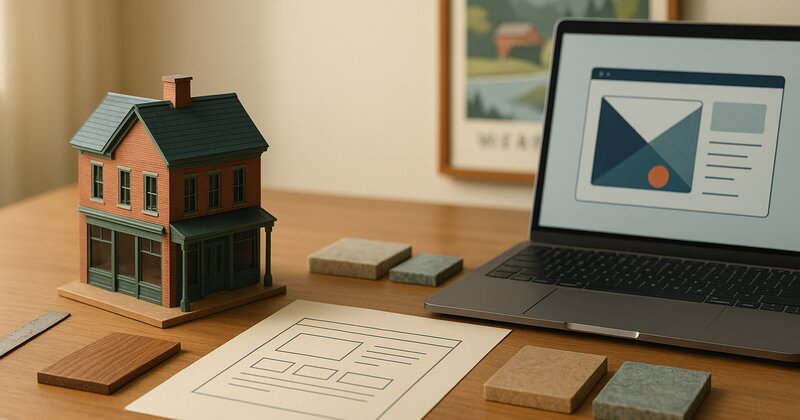
A Wilmington lodge owner received three website quotes in February 2025. The first quote (from a Keene freelancer) was $1,200 for a Wix site. The second quote (from a Brattleboro agency) was $8,500 for a WordPress site with custom design. The third quote (from a Vermont developer) was $3,000 for a custom-coded site with hosting and updates included in a $250/month subscription. The lodge owner had no idea how to evaluate the quotes. They all promised "professional design," "mobile-friendly," and "SEO-optimized." The prices ranged from $1,200 to $8,500. What was the difference? Was the $8,500 site seven times better than the $1,200 site? Was the middle option safer? Was the subscription model a trap or a deal?
The lodge owner picked the $1,200 Wix site because it was cheap and the freelancer promised a two-week turnaround. Four months later, the site was live but ranked nowhere in Google. It loaded in 6 seconds on mobile. When tourists searched "lodging Wilmington VT" or asked ChatGPT "where should I stay near Mount Snow," the lodge did not appear. The owner Googled competitors and found that the top-ranking lodges had fast, clean sites that loaded in under 2 seconds. She paid a consultant to audit her site. The consultant said the Wix site was too slow, the SEO was broken (no title tags, no schema markup, no local optimization), and the site would need to be rebuilt. Total cost so far: $1,200 (original build) + $800 (consultant audit and recommendations) = $2,000, with no functioning site and no leads. She wished she had understood what drives website cost before she signed the first contract.
This post breaks down what a website actually costs for a Wilmington business in 2026, what drives the price (platform, speed, SEO, support), what you get at each price tier (DIY, freelancer, agency, custom subscription), and how to evaluate quotes so you do not overpay for mediocre work or underpay and get a site that does not work. No fluff, no jargon, just the honest numbers and tradeoffs.
The four pricing tiers: DIY, freelancer, agency, custom subscription
Website costs in 2026 fall into four broad tiers. Each tier has different tradeoffs (cost, speed, quality, control, ongoing support). Here is what you actually get at each level:
Tier 1: DIY site builders (Wix, Squarespace, GoDaddy) - $200 to $800 first year, $300 to $600 per year ongoing
If you build a site yourself using Wix, Squarespace, or GoDaddy, the out-of-pocket cost is low but the time cost is high and the result is usually mediocre.
What you pay: $15 to $30/month for the platform subscription ($180 to $360/year). Add $15 to $20/year for a custom domain (wilmingtonlodge.com). Add optional costs for premium templates ($50 to $150 one-time), stock photos ($10 to $50), or app add-ons ($5 to $20/month each for things like booking widgets, contact forms, or SEO tools). First-year total: $200 to $800 depending on add-ons. Ongoing: $300 to $600/year.
What you get: A template-based site that you build and manage yourself. Drag-and-drop editor (no coding required). Hosting and SSL certificate included. Basic SEO tools (you have to configure them yourself). Mobile-responsive templates (but you have to test and adjust for your content).
What you do not get: Speed. Most Wix and Squarespace sites load in 4 to 8 seconds on mobile and score 30 to 60 on Google PageSpeed Insights. The platforms load heavy JavaScript, tracking scripts, and unnecessary code that slows everything down. You cannot optimize the code because you do not control it. SEO is limited (title tags and meta descriptions are editable, but schema markup is either absent or very basic LocalBusiness schema that does not cover restaurants, lodges, or service businesses properly). Support is generic (help docs and forums, not one-on-one help for your specific site).
Time commitment: 12 to 30 hours to build the site (learning the platform, picking a template, writing content, adding photos, configuring pages, testing on mobile). Ongoing: 2 to 6 hours per year for updates (changing hours, adding photos, tweaking content). More if things break (template conflicts, app compatibility issues, platform changes).
Best for: Businesses with very tight budgets, businesses that need a placeholder site quickly, or solo entrepreneurs who enjoy tinkering with website tools and do not care about speed or advanced SEO.
Not good for: Businesses that need fast-loading sites, businesses that rely on Google search or AI search for leads, or businesses that do not have 12 to 30 hours to invest in building and troubleshooting a site.
A Wilmington retail shop owner built a Squarespace site herself in 2024. She paid $216/year (Squarespace Business plan, $18/month). She spent 18 hours over two weekends building the site (picking a template, writing copy, uploading 15 photos, configuring the navigation, adding a contact form). The site launched. It looked decent (clean template, professional photos). But it loaded in 5.2 seconds on mobile and scored 42 on PageSpeed Insights. She Googled "gift shop Wilmington VT" and her site was not in the top 10 results. Competitors with faster, custom-coded sites ranked above her. She asked ChatGPT "where can I buy Vermont-made gifts near Wilmington" and her shop was not cited. A year later, the site had generated three leads total (people who already knew the shop name and Googled it directly). She calculated her time at $40/hour (18 hours = $720 opportunity cost) plus $216 (Squarespace subscription) = $936 total first-year cost for a site that generated almost no business. She decided to rebuild with a custom subscription site that would actually rank and generate leads.
Tier 2: Freelance designer or solo developer - $1,200 to $5,000 one-time, $200 to $800/year ongoing
Hiring a freelancer to build your site costs more upfront than DIY but (in theory) delivers higher quality and saves you time. In practice, freelancer quality ranges wildly from excellent to terrible, and the price does not always predict quality.
What you pay: $1,200 to $5,000 one-time fee depending on the freelancer's experience, the platform they use (WordPress, Webflow, custom code), and the complexity of your site (one-page vs. five-page, simple vs. advanced features). Low end ($1,200 to $2,000): freelancer uses a WordPress theme or Wix/Squarespace and customizes it for you. Mid-range ($2,500 to $3,500): freelancer builds a custom WordPress site or a Webflow site with more design control. High end ($4,000 to $5,000): experienced freelancer builds a custom-coded site or heavily customized WordPress site with advanced SEO and integrations.
Ongoing costs: Hosting ($10 to $50/month, $120 to $600/year depending on platform and hosting provider). Domain ($15 to $20/year). Maintenance and updates (optional, $50 to $150/hour if you need changes or fixes, or $50 to $200/month for a maintenance retainer). SSL certificate (usually included in hosting). Backups (usually included in hosting, but not always).
What you get: A site built by someone else (saves you 12 to 30 hours of DIY work). Quality varies enormously depending on the freelancer's skill. Some freelancers are excellent (fast, well-coded sites that rank well in Google). Some are mediocre (slow WordPress sites with poor SEO). Some are terrible (they take your money and disappear, or they deliver broken, unusable work). You have to vet the freelancer carefully (see the web designer vetting post for how to do this).
What you do not get (usually): Ongoing support. Most freelancers deliver the site and then you are on your own. If the site breaks, gets hacked, or needs updates, you pay the freelancer again (hourly rate or new project fee) or you hire someone else to fix it. If the freelancer is busy or unresponsive, you are stuck. Speed is hit or miss (many freelancers use slow WordPress themes or heavy page builders and do not know how to optimize for speed). SEO is often incomplete (basic title tags and meta descriptions, but no schema markup, no local optimization, no speed optimization).
Time commitment: 4 to 8 hours (kickoff meeting, providing content and photos, reviewing drafts, final approval). Minimal ongoing time unless you need to make updates yourself or troubleshoot issues.
Best for: Businesses that do not have time to DIY, have a budget of $1,500 to $5,000, and can vet freelancers carefully to find a skilled one. Works well if you find a good freelancer who builds fast, SEO-optimized sites and offers ongoing support.
Not good for: Businesses that cannot vet freelancers (and risk hiring a bad one), businesses that need ongoing support or frequent updates, or businesses that need guaranteed speed and SEO results.
A Wilmington restaurant hired a freelancer from Manchester, Vermont in 2024. The freelancer quoted $2,800 for a WordPress site. The restaurant paid 50% upfront ($1,400). The freelancer delivered the site six weeks later (two weeks past the promised deadline). The site looked good (clean design, nice photos, clear menu layout). But it loaded in 6.8 seconds on mobile and scored 38 on PageSpeed Insights. The restaurant Googled "restaurant Wilmington VT" and did not appear in the top results. The restaurant asked the freelancer to fix the speed. The freelancer said "speed depends on your hosting, I recommend upgrading to a faster plan." The restaurant paid an extra $30/month for premium hosting ($360/year). The site speed improved slightly (5.4 seconds, score 48) but still was not competitive with faster competitors. The restaurant also discovered the site had no schema markup (no Restaurant type, no menu schema, no hours or cuisine). They hired a different developer to add schema ($600 one-time fee). Total cost: $2,800 (original build) + $600 (schema fix) + $360/year (premium hosting) = $3,400 first year, for a site that loaded slowly and ranked poorly. A custom-coded site with schema included would have cost $3,000 to $3,500 upfront and delivered better speed and SEO from the start.
Tier 3: Agency or design studio - $5,000 to $20,000+ one-time, $500 to $2,000/year ongoing
Agencies and design studios charge premium prices for custom design, branding, strategy, and (sometimes) better project management. You pay for a team (designer, developer, project manager, maybe a copywriter) instead of one freelancer.
What you pay: $5,000 to $10,000 for a small business site (five to ten pages, custom design, WordPress or custom build). $10,000 to $20,000+ for more complex sites (e-commerce, booking systems, membership features, heavy custom development). Agencies often charge by the project or by the hour ($100 to $200/hour, 40 to 100 hours for a typical project).
Ongoing costs: Hosting ($20 to $100/month depending on plan). Maintenance retainer ($200 to $500/month for updates, support, and monitoring, optional). Domain, SSL, backups (usually included).
What you get: Polished design (agencies focus heavily on visual design and branding). Professional project management (clear timelines, milestone check-ins, structured process). A team working on your site (designer, developer, strategist) instead of one person. Usually better communication and reliability than a solo freelancer (agencies have reputations to protect and systems to keep projects on track).
What you do not always get: Speed. Many agencies build on WordPress with heavy themes and page builders (Elementor, Divi, Beaver Builder) that look great but load slowly. Some agencies do not prioritize speed or do not know how to optimize for it. SEO quality varies (some agencies include full local SEO and schema markup, some include only basic on-page SEO, some charge extra for SEO as a separate service). Ongoing support is often bundled into expensive retainers ($200 to $500/month), which is more than most small businesses need or want to pay.
Time commitment: 6 to 12 hours (discovery meetings, content review, design approval, final approval). Agencies handle most of the work, so your time commitment is lower than DIY or working with a freelancer who needs more hand-holding.
Best for: Businesses with budgets of $8,000 to $20,000, businesses that value design and branding heavily, or businesses with complex needs (custom features, integrations, e-commerce). Works well if you find an agency that prioritizes speed and SEO, not just visual design.
Not good for: Small businesses with tight budgets ($5,000 to $20,000 is a lot for a Wilmington retail shop or restaurant), businesses that need fast turnaround (agencies often take 8 to 16 weeks), or businesses that do not need elaborate design and just want a fast, functional, SEO-optimized site.
A Wilmington bed-and-breakfast hired a Brattleboro agency in 2024. The agency quoted $9,500 for a custom WordPress site with booking integration, photo galleries, and branding. The B&B paid 50% upfront ($4,750). The project took 14 weeks (the agency promised 8 to 10 weeks). The site launched. It looked beautiful (custom design, professional photography, elegant typography, cohesive branding). But it loaded in 5.1 seconds on mobile and scored 52 on PageSpeed Insights. The B&B Googled "bed and breakfast Wilmington VT" and ranked fifth (below four competitors with faster sites). The agency said "we can optimize speed for an additional $1,500." The B&B declined (budget was already stretched). A year later, the site had generated 18 bookings (the B&B tracked this via a custom booking form the agency built). Average booking value: $320/night, two-night average stay = $640 per booking. 18 bookings × $640 = $11,520 revenue. The site paid for itself ($9,500 cost vs. $11,520 revenue), but the B&B wondered whether a faster site would have generated more bookings (faster sites rank higher and convert better). The agency's retainer for ongoing support was $300/month ($3,600/year), which the B&B could not afford. They managed updates themselves (changing seasonal hours, adding new photos) and paid the agency $150/hour when something broke (twice in the first year, total $600). Total first-year cost: $9,500 (build) + $600 (fixes) = $10,100. A custom subscription site at $250/month for 12 months would have cost $3,000 total with hosting and support included, but the B&B valued the polished design and was willing to pay extra for it.
Tier 4: Custom subscription model (like Brattleboro Local) - $0 to $800 upfront, $200 to $350/month ongoing
The subscription model flips traditional pricing. Instead of paying $3,000 to $8,000 upfront, you pay little or nothing upfront and pay monthly for the site, hosting, updates, and support bundled together.
What you pay: $0 to $800 upfront (some subscription providers charge a small setup fee, some charge nothing). $200 to $350/month ongoing ($2,400 to $4,200/year). The monthly fee includes the site build, hosting, SSL certificate, backups, updates, support, and (usually) SEO optimization.
What you get: A custom-coded or custom-built site optimized for speed (90+ PageSpeed Insights scores, under 2 seconds load time). Full local SEO (title tags, meta descriptions, schema markup for your business type, local keywords, Google Business Profile integration). Hosting and technical management included (you never think about hosting, SSL, backups, or server issues). Ongoing support included (if the site breaks, the provider fixes it at no extra charge). Updates included (change your hours, add photos, tweak content, no hourly fees).
What you do not get: Ownership. You do not own the site outright (if you stop paying the monthly fee, the site goes offline or reverts to the provider). Some businesses are uncomfortable with this model because they are used to owning websites. But ownership is overrated: most business owners never move or self-host their sites anyway, and the subscription model eliminates surprise repair bills and hosting hassles.
Time commitment: 4 to 6 hours (kickoff meeting, content and photo review, final approval). Ongoing: zero to one hour per quarter (if you want to update content yourself, or you can ask the provider to do it as part of the subscription).
Best for: Businesses that want fast, SEO-optimized, professionally managed sites without a big upfront cost. Works especially well for businesses that do not have $3,000 to $8,000 in cash available, businesses that value predictable monthly costs over surprise repair bills, or businesses that do not want to think about hosting, backups, or technical maintenance.
Not good for: Businesses that need to own their site outright (rare, but some businesses have this requirement), businesses that want to move or self-host the site later (subscriptions lock you into the provider), or businesses with very tight budgets who cannot afford $200 to $350/month ongoing.
A Wilmington cafe hired Brattleboro Local for a subscription site in late 2024. No upfront cost (Brattleboro Local waives the setup fee for southern Vermont businesses). $250/month ongoing. The site launched in four weeks. One page (cafe name, description, menu highlights, hours, location, contact form, photos of the space and the food). Custom-coded, loaded in 1.7 seconds on mobile, scored 94 on PageSpeed Insights. Full schema markup (Restaurant type, servesCuisine: "Cafe", menu schema for 10 items, hours, address, phone, priceRange). The cafe Googled "cafe Wilmington VT" two weeks after launch and ranked third (up from invisible before). ChatGPT cited the cafe when tourists asked "where can I get breakfast in Wilmington Vermont." Three months later, the cafe calculated that the site generated 12 to 15 new customers per month (people who found the cafe via Google or AI search and then visited in person). Average transaction: $22. 12 customers × $22 = $264/month revenue from the site. The site ($250/month) paid for itself with 11 customers per month. The cafe owner valued the predictable cost (no surprise repair bills, no hosting renewals, no "your site is hacked, pay $500 to fix it" emergencies). One year total cost: $250 × 12 = $3,000. Comparable to a mid-range freelancer but with faster speed, better SEO, hosting included, and ongoing support included.
What actually drives website cost (and what does not matter as much as you think)
When you compare quotes, focus on what drives cost and what drives results. Some cost drivers matter a lot (speed, SEO, support). Some do not matter as much as designers claim (visual design polish, number of pages, trendy features).
Speed is the single most important cost driver
Speed determines whether your site ranks in Google, whether visitors stay or leave, and whether your site works in rural Vermont where mobile data is slow. A fast site (under 2 seconds, 90+ PageSpeed Insights score) requires clean code, optimized images, minimal JavaScript, and a developer who knows how to build for performance. This costs more upfront (custom code or carefully optimized WordPress) but delivers far better results than a slow site.
A slow site (4+ seconds, 30 to 60 PageSpeed Insights score) is cheaper to build (use a heavy WordPress theme or Wix template, dump in content, launch) but costs you customers. Google ranks slow sites lower. Visitors leave before the page loads (53% of mobile visitors abandon a page that takes more than 3 seconds to load). AI tools struggle to crawl and extract content from slow sites.
When you evaluate quotes, test the designer's portfolio sites using Google PageSpeed Insights (pagespeed.web.dev). If their portfolio sites score below 80, they do not know how to build fast sites (or they do not care). Walk away. A $1,500 slow site will cost you more in lost leads than a $3,500 fast site costs upfront. (See the custom vs. WordPress post for why custom code is faster.)
SEO depth (especially schema markup) determines whether you get found
A site with basic SEO (title tags, meta descriptions, mobile-friendly design) is better than no site, but it is not enough in 2026. You need schema markup (structured data that tells Google and AI exactly what your business is, what you sell, your hours, your location, your pricing). Schema is invisible to human visitors but critical for search engines and AI tools.
Most DIY site builders include minimal schema (generic LocalBusiness markup with no detail). Most freelancers skip schema entirely or add only basic LocalBusiness schema (not specific enough for restaurants, lodges, retail shops, or service businesses). Agencies sometimes include schema, sometimes charge extra for it, sometimes do not even know what it is.
When you get a quote, ask: "Does the site include schema markup specific to my business type (Restaurant, LodgingBusiness, Store, etc.)? Does it include menu schema, service area schema, or other relevant properties?" If the designer says "we handle SEO" but cannot explain schema, they are doing basic SEO only. You will need to pay someone else to add schema later, or your site will underperform in AI search. (See the Wilmington restaurant schema post for why this matters.)
Ongoing support determines your total cost over time
A $2,000 one-time build with no ongoing support sounds cheap until the site breaks, gets hacked, or needs updates. Then you pay $100 to $200/hour to fix it, or you pay another developer to rebuild it. Over three years, surprise repair bills can add $1,000 to $3,000+ to your total cost.
A $3,000 subscription (12 months × $250/month) includes hosting, backups, updates, and support. If anything breaks, it gets fixed at no extra charge. Over three years, your total cost is $9,000 ($250/month × 36 months), which is predictable and includes everything. Compare this to a $2,000 build + $600/year hosting + $500 to $2,000 in repair bills over three years = $3,800 to $8,000 total, with more hassle and less reliability.
When you evaluate quotes, ask: "What happens if the site goes down, gets hacked, or needs updates? Is support included, or do I pay hourly? What is the hourly rate?" Factor ongoing costs into your total cost comparison, not just the upfront price.
Number of pages and visual design polish matter less than you think
Many agencies justify high prices by saying "we design five custom pages" or "we create a unique brand identity." Pages and polish are nice, but they do not drive leads. Speed, SEO, and clear content drive leads. A one-page site that loads in 1.5 seconds and ranks in the top three Google results will generate more business than a five-page site that loads in 6 seconds and ranks on page two.
Most small businesses in Wilmington (restaurants, lodges, retail shops, service businesses) need one to three pages total: a homepage (what you offer, hours, location, contact), an About page (optional, your story and team), and a Menu/Services/Products page (optional, more detail on what you sell). You do not need five pages, ten pages, or elaborate multi-section layouts. You need fast, clear, findable.
When you evaluate quotes, do not pay extra for "custom five-page design" unless you genuinely need five pages. Most businesses do not. A well-built one-page site beats a poorly-built five-page site every time.
Platform (WordPress vs. custom code vs. site builder) affects speed and flexibility
Platform is a cost driver, but not in the way most people think. WordPress is not inherently cheaper than custom code. A cheap WordPress site built with a heavy theme will be slower and less effective than a custom-coded site. An expensive WordPress site built with clean code and careful optimization can be fast and effective, but it costs as much (or more) than custom code because optimization is labor-intensive.
Custom code is often the best balance of speed, SEO, and cost for small business sites. A simple custom-coded site takes 15 to 25 hours to build (one to two weeks), costs $2,500 to $4,000, loads in under 2 seconds, and requires minimal ongoing maintenance. WordPress sites often take longer to build (because you have to configure plugins, troubleshoot conflicts, and optimize for speed after the fact) and cost more over time (plugin licenses, security patches, compatibility issues).
When you evaluate quotes, ask what platform the designer uses and why. If they default to WordPress "because it's the industry standard," they may not know how to build custom code (or they rely on WordPress because it is easier for them, not better for you). If they recommend custom code or a modern framework (like Hugo, Eleventy, or Next.js), they likely prioritize speed and performance.
How to evaluate quotes and avoid paying too much (or too little)
You have three quotes for your Wilmington business site. One is $1,500. One is $4,200. One is $250/month subscription. How do you decide?
Step one: Test the designer's portfolio for speed and SEO
Visit three to five sites in the designer's portfolio. Run them through Google PageSpeed Insights (pagespeed.web.dev). If the portfolio sites score below 70 on mobile, the designer does not build fast sites. Walk away, regardless of price. Test whether the portfolio sites rank in Google (Google the business name + town, see if the site shows up in the top results). Check whether the sites have schema markup (use Google's Rich Results Test, search.google.com/test/rich-results, or view page source and search for "schema.org"). If the portfolio sites have no schema, the designer does not do complete SEO.
A fast site with schema costs more to build but performs better. A slow site with no schema is cheaper upfront but generates fewer leads. Do not compare price alone. Compare price + speed + SEO.
Step two: Ask about ongoing support and factor it into total cost
Ask: "Is hosting included? Is support included? What happens if the site breaks or I need updates?" Calculate the three-year total cost, not just the upfront cost. Example:
Quote A (freelancer): $2,000 upfront + $300/year hosting + $500 estimated repairs over three years = $3,400 total.
Quote B (agency): $7,000 upfront + $600/year hosting + $0 repairs (agency offers a $200/month retainer for ongoing support, but you decline) = $8,800 total.
Quote C (subscription): $0 upfront + $250/month × 36 months = $9,000 total, includes hosting, support, updates.
Quote A looks cheapest upfront but has uncertainty (what if repairs cost $2,000 instead of $500?). Quote B is expensive and includes no support unless you pay $200/month extra. Quote C is predictable and includes everything.
Step three: Ask about timeline and process
Ask: "How long will the project take? What is your process? How often will we communicate?" A designer who promises a two-week timeline is either very experienced (possible but rare) or overpromising (more common). Most small business sites take four to eight weeks to build (including discovery, content gathering, design, development, revisions, and launch). Be skeptical of very fast timelines (rushed work is often low-quality work).
A clear process (kickoff meeting, content deadline, design draft, revisions, final approval, launch) signals a professional designer. A vague process ("we'll figure it out as we go") signals chaos and delays.
Step four: Negotiate based on what you actually need
If a designer quotes $5,000 for a five-page site and you only need one or two pages, negotiate. "I only need a homepage and a contact page. Can you build that for $2,500 to $3,000?" If a designer quotes $250/month but your budget is $200/month, ask whether they can reduce scope (fewer photos, simpler layout, no blog section) to hit your budget. Most designers are willing to negotiate if you are clear about constraints.
Step five: Walk away from quotes that feel wrong
If a designer cannot explain their process, cannot show fast portfolio sites, dodges questions about support or refunds, or pressures you to sign quickly, walk away. There are hundreds of web designers in Vermont and New Hampshire. You do not need to settle for one who raises red flags. Trust your gut. If something feels off, it probably is.
A Wilmington outdoor gear shop received four quotes in 2024. Quote 1: $900 (freelancer, Wix site, two-week timeline, no support). Quote 2: $3,200 (freelancer, custom WordPress site, four-week timeline, hosting not included, support $120/hour). Quote 3: $8,000 (agency, custom design, eight-week timeline, hosting included, support $300/month retainer). Quote 4: $250/month subscription (Brattleboro Local, custom code, four-week timeline, hosting and support included). The shop tested portfolios. Quote 1 freelancer's sites scored 35 to 50 on PageSpeed Insights (too slow). Quote 2 freelancer's sites scored 60 to 75 (better but not great). Quote 3 agency's sites scored 55 to 80 (inconsistent, some fast, some slow). Quote 4 subscription provider's sites scored 88 to 96 (consistently fast). The shop calculated three-year costs. Quote 1: $900 + $360/year hosting + $1,000 estimated repairs = $2,980 (but slow site, poor SEO). Quote 2: $3,200 + $360/year hosting + $500 estimated repairs = $4,780. Quote 3: $8,000 + $0 hosting (included) + $0 repairs (if they paid the $300/month retainer, but they could not afford it) = $8,000 + unknown repair costs. Quote 4: $0 upfront + $250/month × 36 months = $9,000 (everything included). The shop chose Quote 4 because the portfolio sites were fastest, the total cost was predictable, and support was included. The site launched in four weeks, ranked in the top three Google results for "outdoor gear Wilmington VT," and generated 18 to 22 leads per month (tracked via contact form and phone calls mentioning "I found you on Google"). The shop owner calculated that the site paid for itself in the first month and generated $8,000 to $12,000 in revenue per year above the subscription cost.
Why Wilmington businesses face unique cost tradeoffs (tourism, seasonality, competition from Manchester and Brattleboro)
Wilmington is a small town (population ~1,800) with outsized web presence needs because of tourism (Mount Snow, summer leaf-peeping, Route 9 traffic) and because you compete with businesses in Manchester (15 miles east), Brattleboro (20 miles west), and even Keene, New Hampshire (25 miles south). This creates specific cost tradeoffs.
You need to rank for both "Wilmington VT" and broader regional queries
A Wilmington restaurant or lodge needs to rank for "restaurant Wilmington VT" and "lodging Wilmington VT" (high-intent queries from tourists already planning a Wilmington trip). But you also need to rank for "restaurants near Mount Snow," "places to stay Route 9 Vermont," "lodging southern Vermont," or "where to eat between Manchester and Brattleboro." These broader queries capture tourists researching the region who have not committed to Wilmington yet.
Ranking for both types of queries requires more SEO work (schema markup with area served properties, content that mentions Mount Snow and Route 9, internal links to regional context, citations on regional tourism sites). A basic one-page site with minimal SEO may rank for "Wilmington VT" queries but miss the broader regional traffic. A more complete site with full schema, regional keywords, and area-served markup captures both.
Cost implication: full local SEO (schema, area served, regional keywords) adds $500 to $1,500 to your build cost compared to basic SEO (title tags and meta descriptions only). But the ROI is high because you capture tourists searching for the region, not just Wilmington.
Seasonal businesses need sites that work year-round even if you are closed part of the year
Many Wilmington businesses are seasonal (ski-season-only lodges, summer-only cafes, closed January through March). You still need a website that ranks and captures bookings or reservations year-round because tourists plan trips months in advance. A skier planning a February Mount Snow trip starts researching lodging in October or November. Your site needs to rank in October and allow advance bookings or inquiries even if you are closed until December.
Cost implication: your site needs booking integration or a contact form that works off-season, clear seasonal hours information (schema markup with openingHoursSpecification for seasonal schedules), and content that signals you are open during peak seasons. This adds complexity (and cost) compared to a year-round business with fixed hours. Budget $500 to $1,000 extra if you need booking integration or seasonal hours handling.
You compete with Manchester and Brattleboro businesses that have bigger budgets
Manchester and Brattleboro have more businesses, more population, and (often) bigger marketing budgets. A Manchester restaurant may spend $10,000 on a polished agency site. A Brattleboro lodge may pay $15,000 for custom design and branding. You do not need to match those budgets to compete, but you need a site that performs as well (or better) in the metrics that matter: speed, SEO, and schema markup.
A Wilmington business with a $3,000 custom-coded site that loads in 1.8 seconds and has full schema markup will outrank a Manchester competitor with a $10,000 WordPress site that loads in 5 seconds and has no schema. Focus your budget on performance, not polish. Speed and SEO beat visual design when it comes to rankings and AI citations.
Cost implication: you can compete on a smaller budget if you prioritize the right things. A $2,500 to $4,000 site built for speed and SEO will beat a $8,000 to $12,000 site built for visual design but weak on technical performance. Do not overspend on design. Spend on speed, schema, and local optimization.
Mobile performance matters more in Wilmington because of rural mobile data
Wilmington and the Route 9 corridor have spotty mobile coverage (Verizon works better than AT&T or T-Mobile, but even Verizon has dead zones). Tourists driving Route 9 or staying at Mount Snow often search for restaurants, lodging, and activities on their phones with slow 3G or 4G connections. If your site takes 6 seconds to load on a fast connection, it may take 15+ seconds (or time out entirely) on a slow rural mobile connection. You lose the visitor before the page loads.
A fast site (under 2 seconds on a fast connection) will load in 4 to 6 seconds on a slow mobile connection, which is acceptable. A slow site is unusable.
Cost implication: mobile performance optimization is non-negotiable for Wilmington businesses. Do not accept a site that loads slowly on mobile. Test every quote's portfolio sites on your phone (ideally on Route 9 with one or two bars of signal). If the portfolio sites load slowly, the designer does not build for mobile performance. Walk away.
A Wilmington bed-and-breakfast hired a designer who built a beautiful WordPress site with large photos and video backgrounds. The site loaded in 7 to 9 seconds on fast Wi-Fi and 15+ seconds on mobile data. Tourists driving Route 9 searched "lodging Wilmington VT" on their phones, clicked on the B&B's link, and gave up waiting for the page to load. The B&B did not realize this was happening until a guest mentioned "I tried to visit your website on the drive up but it wouldn't load, so I booked somewhere else and called you later when I got here." The B&B owner tested the site on her phone on Route 9 (two bars of Verizon signal). The homepage took 18 seconds to load. She paid a developer $1,200 to rebuild the site with optimized images and no video backgrounds. The new site loaded in 3 seconds on slow mobile data. Bookings from mobile search increased 40% over the next six months.
What a realistic Wilmington business website should cost in 2026
Based on the tradeoffs and cost drivers above, here is what a Wilmington business should expect to pay for a professional, fast, SEO-optimized site in 2026:
One-time build (freelancer or small agency): $2,500 to $4,500
This gets you a custom-coded or carefully optimized WordPress site with one to three pages, fast loading speed (under 2 seconds, 85+ PageSpeed Insights score), full local SEO (title tags, meta descriptions, schema markup specific to your business type, local keywords, area-served properties), mobile optimization, real photos (you provide them or the designer sources stock photos), hosting setup (you pay for hosting separately, $10 to $30/month), and basic training on how to update content yourself.
You pay for hosting separately ($120 to $360/year). You pay for updates or fixes separately ($100 to $150/hour, or you negotiate a maintenance retainer for $50 to $150/month). You own the site outright.
This is the best option if you have $2,500 to $4,500 available upfront, you are comfortable managing hosting yourself (or paying someone to manage it), and you do not need frequent updates or ongoing support.
Subscription model (like Brattleboro Local): $0 to $500 upfront, $200 to $300/month ongoing
This gets you a custom-coded site with the same specs as the one-time build (fast speed, full SEO, schema markup, mobile optimization), plus hosting, SSL, backups, updates, and support included. You pay little or nothing upfront. You pay monthly for as long as you want the site. If you stop paying, the site goes offline (you do not own it).
This is the best option if you do not have $2,500 to $4,500 in cash available, you value predictable monthly costs over surprise repair bills, or you do not want to think about hosting, backups, or technical maintenance.
Total cost over three years: $7,200 to $10,800 ($200 to $300/month × 36 months). Comparable to a one-time build + three years of hosting + repairs, but with no surprise costs and no management burden.
DIY (Wix, Squarespace): $200 to $800 first year, $300 to $600/year ongoing
Only choose this if you have no budget for a professional build ($2,500+ is not available) and you are willing to spend 12 to 30 hours learning the platform and building the site yourself. Accept that the site will be slower than a custom build (4 to 8 seconds load time, 30 to 60 PageSpeed Insights score) and will rank lower in Google. Think of it as a placeholder until you can afford a professional build.
This is not a good long-term solution for a business that relies on Google search or AI search for leads. It is a short-term budget option.
Do not pay more than $5,000 for a small business site unless you have complex needs
If a designer or agency quotes $6,000 to $12,000 for a simple business site (one to five pages, no e-commerce, no booking system, no complex integrations), you are overpaying. High prices are justified for complex builds (e-commerce with 50+ products, custom booking systems, membership sites, heavy custom development). For a standard business site (restaurant, lodge, retail shop, service business), $2,500 to $5,000 is the fair range for quality work.
If you love the designer's portfolio and they quote $7,000, negotiate. Ask what drives the cost and whether they can reduce scope to hit $4,000 to $5,000. Many designers price high because they assume you will negotiate. Others price high because they specialize in enterprise clients and are not a good fit for small businesses. Walk away if the price does not make sense for your needs.
The bottom line: speed, SEO, and support matter more than upfront price
A Wilmington business website is an investment, not an expense. A $1,200 slow site that does not rank costs you thousands in lost leads over a year. A $3,500 fast site that ranks in the top three Google results and gets cited by ChatGPT generates leads every month and pays for itself quickly.
When you evaluate quotes, do not focus on upfront price alone. Focus on three-year total cost (upfront + hosting + repairs + updates). Focus on portfolio speed (test it yourself using PageSpeed Insights). Focus on SEO depth (ask about schema markup and local optimization). Focus on support (what happens when something breaks?).
The best website for most Wilmington businesses in 2026 is a fast, custom-coded, SEO-optimized site with full schema markup, built for $2,500 to $4,500 one-time or $200 to $300/month subscription. This gets you a site that loads in under 2 seconds, ranks in the top three Google results for your core queries, gets cited by AI tools, works flawlessly on slow rural mobile connections, and either requires minimal ongoing maintenance (one-time build) or includes hosting and support (subscription model).
Do not overpay for elaborate design or unnecessary features. Do not underpay for a slow DIY site that will not generate leads. Invest in speed, invest in SEO, invest in support. Your website works 24/7, captures tourists planning trips months in advance, and competes with Manchester and Brattleboro businesses that have bigger budgets. A $3,000 site that performs well is worth more than a $10,000 site that looks pretty but loads slowly and ranks poorly.
The Wilmington businesses that thrive in 2026 and beyond will be the ones with fast, findable, mobile-optimized sites that show up when tourists Google "restaurant Wilmington VT" or ask ChatGPT "where should I stay near Mount Snow." The businesses that settle for cheap, slow, poorly optimized sites will wonder why competitors are booked solid while they have empty tables and vacant rooms. The difference is not luck. It is the website.
Every custom site we build includes fast loading speed (90+ PageSpeed Insights scores, under 2 seconds), full local SEO (schema markup specific to your business type, local keywords, area-served properties for regional reach), mobile optimization (tested on slow rural connections, not just fast Wi-Fi), hosting and support (included in the subscription, no surprise bills), and a clear four-week timeline. We show you examples of sites we have built for southern Vermont businesses (restaurants, lodges, retail shops, service businesses) so you can see real speed scores, real rankings, and real results. If you are not sure what your current site costs you in lost leads or what a better site would deliver, the free 27-point local SEO audit includes a full speed test, SEO analysis, and schema check, plus a side-by-side comparison of your site vs. top-ranking competitors. We show you where you are losing leads and what it would take to capture them. No pressure, just the diagnostic and the roadmap. Check out the pricing for a subscription site (everything included, no surprise costs) or get started with the audit to see what your site actually costs you right now.
Keep reading

How much does a website cost in West Dover, Vermont? (2026 honest breakdown)
DIY vs freelancer vs agency vs custom-coded: what drives the number in 2026, from $0 Wix sites to $15K agency builds, with no fluff and real tradeoffs for West Dover lodging, dining, and ski-season businesses.

How much does a website cost in Putney, Vermont? (2026 honest breakdown)
A Putney farm store owner got quotes from $800 to $9,000 for a website and had no idea which was fair. Here's what drives the number, what you get at each price tier, and what actually matters for a small business in 2026.
Choosing a web designer in Windham County: the 6 questions that matter most
A Brattleboro contractor got burned by a web designer who disappeared mid-project. Here are the six questions that would have caught the red flags before he signed anything.