
Web Design · July 21, 2026 · 18 min read
How long should building your small-business website actually take?
A contractor in Putney asks how fast we can launch his site. The honest answer: four to eight weeks for a real custom build. Here's why that timeline isn't a problem and what those weeks actually buy you.
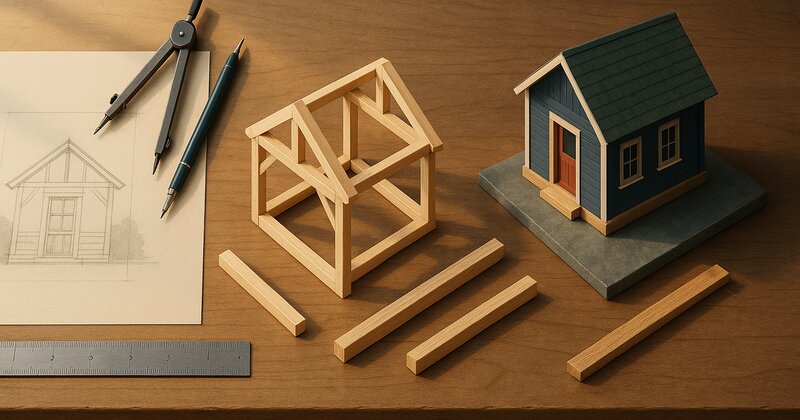
The weekend promise versus the month reality
A contractor in Putney calls on a Tuesday. He needs a website, he has been meaning to do this for three years, and he finally has a weekend free. Can we turn it around by Monday?
The short answer is no. The longer answer is that anyone who says yes is selling you a template with your logo swapped in, and you will spend the next two years wondering why the phone never rings from web traffic while your competitor three towns over, who spent eight weeks on a proper build, books out through June.
Real custom websites take four to eight weeks to build correctly. Not because the work is slow, but because the work is specific: discovery, architecture, copywriting that actually converts, custom design that loads fast, testing on real devices over real Windham County cell coverage, and the technical SEO foundation that makes Google pay attention. Every one of those steps requires input, revision, and time to think.
This is not a flaw in the process. It is the process working. The question is not how to make it faster - it is whether you want a site that looks done or a site that works.
What the template builders promise and deliver
Wix, Squarespace, GoDaddy, and a dozen other drag-and-drop platforms all sell the same dream: a professional website in an afternoon, no code required, $12 a month. The marketing shows clean templates, stock photography, and a timeline measured in hours. For a certain kind of business owner, especially one who just needs to check the box that says "I have a website," this sounds perfect.
Here is what you actually get in that weekend build:
A template that looks like a template. The layout is identical to a thousand other sites built on the same theme. Google sees it. Visitors see it. Everyone quietly understands that nobody spent time here, which makes them wonder what other corners you cut.
Placeholder copy you probably never replaced. "Welcome to our site. We are passionate about quality and committed to excellence." Every template ships with this language, and half the people who launch in a weekend leave it there or write something equally generic because they do not know what else to say. The result is a site that could describe any business in any category.
Slow load times. Page builders are slow by design, because they load a massive pile of generic code to handle every possible layout configuration, and your site inherits all of it whether you use it or not. We have tested hundreds of Wix and Squarespace sites; the typical mobile PageSpeed score is in the 30s or 40s. Google's threshold for "good" is 90. The difference is rankings, conversions, and whether someone on a weak cell connection between Bellows Falls and Westminster waits for your site or backs out.
No local SEO foundation. The platform does not guide you to create separate pages for each town you serve or each service you offer, because it does not understand how local search works. So you end up with one generic "services" page and zero rankings for "plumber Putney" or "electrician Westminster," even though you serve both towns and people search those terms every week.
No support after launch. You are alone with a page builder and a knowledge base. When you want to add a feature or fix something Google Search Console is flagging, you are either learning code or paying someone hourly to wrestle with the platform's limitations.
The weekend site is done fast because nothing in it is custom. It is assembly, not building. And it shows.
What the eight-week custom build actually involves
When we tell a prospect that a real build takes four to eight weeks, the first reaction is often sticker shock - not at the price, but at the time. Why does it take two months to build a ten-page website?
Because those ten pages are not templates. They are built from scratch, for your business, with every decision optimized for the searches your customers actually run and the conversions you actually need. Here is what happens in those weeks, and why each step matters.
Week one: discovery and strategy (5-8 hours)
We start by learning your business in detail. Who are your customers? What do they search for when they need you? Which towns do you serve, and which services make you the most margin? What does your competitor's site do well, and where do they leave opportunity on the table? What does success look like in six months - more calls, more bookings, less time explaining the same things?
This is not a formality. The answers shape everything: which pages we build, what those pages say, how we structure navigation, what we optimize for. A Brattleboro HVAC contractor who makes most of his margin on heat-pump installs needs a completely different site than one who lives on service calls, even though both are "HVAC contractors." We also audit your current web presence if you have one: what you rank for now, how fast your site loads, what your Google Business Profile says, where the technical gaps are.
The discovery phase is also where we align on timeline, content responsibility, and what you will need to provide (photos, service details, pricing guidance). A project that starts with a clear shared picture finishes on time. One that starts with assumptions finishes late or wrong.
Weeks two and three: architecture and copywriting (10-15 hours)
This is where we decide what pages exist, how they connect, and what each one says. For a service business covering multiple towns, that typically means:
- A homepage that states, in ten seconds, what you do and where
- A dedicated page for each service you offer (not one generic "services" page, but separate pages for the things people actually search: "heat pump installation," "furnace repair," "ductless mini-splits")
- A dedicated page for each town or region in your service area
- An about page that builds trust with real details, not marketing fluff
- A contact page with one job: make it easy to call or email you right now
Every page is then written, from scratch, in plain language that answers the questions your customers ask. Not SEO word salad. Not corporate vagueposting. Sentences like "We install and service heat pumps in Brattleboro, Putney, and Westminster" instead of "Your trusted partner in home comfort solutions."
This is the step most template sites skip entirely, and it is the step that makes the biggest difference in both search rankings and conversions. Google ranks pages that match searches. A contractor with a dedicated "heat pump installation Brattleboro" page will outrank the one with a generic services page every single time, because Google shows the specific page to the specific search. The copywriting phase is also where we write the metadata, schema markup, and alt text that help search engines and AI assistants understand what each page is about.
We send you drafts at the end of week two. You read them, correct anything we got wrong, and tell us what is missing. We revise. This usually takes two rounds, because the first draft teaches you what questions we should have asked in discovery.
Weeks three and four: design and development (12-18 hours)
Once we know what the site says, we design how it looks and build it in code. Not in a page builder - in actual HTML, CSS, and PHP, which is why the custom website builds we ship load in under two seconds on mobile.
Design starts with a mockup of the homepage: layout, typography, color, how the navigation works, where the phone number lives, how we handle photography. You review it, we adjust, and once the homepage is approved we apply that design system to the rest of the site. We are not trying to win design awards; we are building a site that is fast, accessible, readable on every device, and structured so that the most important thing on every page (call now, book here, see the menu) is unmissable.
Development happens in parallel. We hand-code every page as static HTML or custom PHP templates, which means there is no framework to load, no theme overhead, no plugin stack slowing things down. We build the contact form (two or three fields maximum, because long forms kill conversions). We add schema markup so Google knows what your business is, where you operate, and when you are open. We set up clean URLs, fast image loading, and a logical internal linking structure that helps both humans and crawlers navigate.
By the end of week four, the site is functionally complete. It does not live on your domain yet, but it exists on a staging server where you can click through it, test it on your phone, and see what your customers will see.
Week five: revision and content finalization (4-6 hours)
You walk the staging site and send us everything that needs to change: a heading that is unclear, a service we described wrong, a town page that should mention a landmark, a photo that should be swapped. We make the changes, you review again, and we repeat until you are confident the site represents your business accurately.
This is also when you finalize any remaining content we are waiting on: final menu pricing, staff bios, testimonials you wanted to add, the last batch of project photos. Some clients provide all of this in week one; others need the staging site to see what is missing. Either way works, but it is why the timeline stretches when content arrives late.
Weeks six through eight: testing, launch, and SEO setup (6-10 hours)
We test the site in every browser and device size we can simulate: Chrome, Safari, Firefox, mobile, tablet, laptop, giant monitor. We run it through accessibility checkers to make sure it works for screen readers. We test PageSpeed on real mobile connections to make sure it actually loads fast, not just fast on our office fiber. We fix anything that breaks or lags.
Then we configure your domain, move the site to the live server, and set up all the technical SEO infrastructure most site builders never touch:
- Google Search Console, so you can see what you rank for and what errors Google finds
- A sitemap that tells search engines which pages exist and how often they change
- Redirects from your old site's URLs if you had one, so you do not lose any search equity
- Canonical tags, Open Graph metadata, and Twitter card markup so your site looks correct when someone shares it
- Google Business Profile integration, review schema, and local business markup
We also configure analytics so you can see where your traffic comes from, which pages people visit, and which paths lead to contact. And we walk you through how to update common things yourself (hours, a new photo, a blog post if you are publishing one), so you are not dependent on us for every small change.
Finally, we monitor the first week after launch to catch anything that only shows up under real traffic: a form that does not send on one email provider, a page that looks broken on one specific Android browser, an image that loads slowly under real-world conditions. Most launches are smooth. The ones that are not get fixed within hours, because we are watching.
What you cannot compress without losing something real
The eight-week build is not eight weeks of nonstop work. It is eight weeks of calendar time with built-in space for your feedback, revisions, and the rounds of iteration that turn a good site into a working site. You can compress that timeline if you have to - we have done four-week builds when someone's current site died or a seasonal deadline demanded it - but compression costs something.
If you compress discovery, we miss the details that make your business different from the competitor two towns over, and the site ends up generic. If you compress copywriting, the pages say the right general things but miss the specific searches people run. If you compress design, the site works but does not feel like you. If you compress testing, you launch with bugs that cost you conversions until you catch them.
The timeline is not padding. It is the minimum time to do the work right and still leave room for you to stay focused on running your business instead of answering web questions eight hours a day.
Why the timeline is a feature, not a bug
The eight-week build has a hidden advantage the weekend template does not: by the time you launch, the site has been thought through, tested, revised, and refined by two people (you and us) over two months. Every page has been read multiple times. Every button has been clicked. Every search term has been considered. The result is not just a site that works on day one, but a site that keeps working, because the foundation is solid.
The template site launches fast and breaks slowly. Six months in, you realize it does not rank for anything. A year in, you notice the contact form was never sending email correctly. Two years in, you accept that the phone never rings from the web and maybe that is just how it is now.
The custom site launches slower and compounds faster. Month two, you start ranking for a few key searches. Month six, you own your town name plus your category. Month twelve, the site is your best salesperson, and you have forgotten what it was like to explain the same things on every call because the site did it first. The example sites in our portfolio all follow this curve, and the ones that have been live longest are the ones generating the most leads, because time and search authority compound.
The question to ask before you choose speed
When someone promises you a site in a weekend, ask this: will it rank for the searches my customers actually run, or will it just exist?
A site that exists is not expensive - $12 a month, a weekend of your time, done. A site that ranks costs more up front and pays back monthly forever, because the searches do not stop. Someone in Westminster is searching for an electrician this week. Someone in Newfane is searching for a weekend inn next month. Someone in Putney is searching for a plow contract in October. The business that owns those searches is the business whose site was built to rank for them, which means separate town pages, separate service pages, fast load times, schema markup, and all the invisible infrastructure the weekend template does not include.
You can launch in a weekend and spend two years invisible, or you can spend eight weeks building it right and spend the next two years answering the phone. The math is not subtle.
What to do if you actually need it fast
Sometimes the timeline is not negotiable. Your old site died, or a competitor just launched and you are losing ground, or you have a seasonal deadline and eight weeks puts you past peak. In those cases, here is the honest path:
Option one: Launch a simple holding page now - one page, your name, what you do, where, phone number, email, hours - and build the real site in parallel. The holding page keeps you visible while the real build happens correctly. It is not a strategy for the long term, but it is better than a template you will regret in six months.
Option two: Compress the build to four weeks by frontloading all your content and feedback. If you can provide final copy, photos, and service details in week one, and commit to reviewing drafts within 24 hours, we can tighten the schedule significantly. This requires focus and availability, but it works.
Option three: If you are genuinely in "I need something live tomorrow" territory, use a template for now and budget to rebuild it right in the next slow season. Just go in knowing that the template is a placeholder, not a solution, and plan the replacement before you get comfortable with it. We have rebuilt dozens of sites for businesses that launched on Wix or Squarespace, realized it was costing them leads, and decided to do it correctly the second time. That path costs more than doing it right the first time, but it is better than staying on the template for five years.
How to tell whether a timeline is honest or padded
Not every web designer or agency needs eight weeks. Some can ship a quality custom site in five or six. Some need ten or twelve because their process includes more rounds of revision or they are juggling many projects. The timeline itself is not the signal; the explanation is.
If someone says "four to eight weeks" and can walk you through what happens in each phase and why it takes that long, that is honest. If someone says "twelve weeks" and cannot explain what happens in weeks seven through twelve, that is padding. If someone says "we will have it done in three days," that is a template with your name on it.
Ask this: "What happens in week three?" A builder who knows will tell you exactly what they are working on and what they need from you. A builder who does not know will give you vague assurances.
Also ask what happens if you are slow to provide feedback or content. A builder who has done this before will tell you that delays on your side push the timeline back one-for-one, and the project is only as fast as the slowest input. A builder who promises the timeline is fixed no matter what is either lying or planning to launch without your input.
The honest timeline for a Windham County small business
Here is what we tell prospects when they ask how long a build takes, broken down by business size and complexity. These are elapsed calendar weeks, not hours of work, and they assume normal feedback speed (you review drafts within a few days, not a few weeks).
Small service business (trades, solo consultant, simple retail): Four to six weeks. Ten to fifteen pages, straightforward service structure, a handful of town pages. Example: a Bellows Falls electrician, a Brattleboro bookkeeper, a Putney dog trainer.
Established multi-service or multi-location business: Six to eight weeks. Twenty to thirty pages, more complex service breakdown, more town pages, possibly some custom functionality like a quote estimator or booking calendar. Example: an HVAC company covering five towns, a law office with three practice areas, a property-management company.
Hospitality, retail with inventory, or anything requiring custom tools: Eight to twelve weeks. The site itself might be straightforward, but integrating a booking system, building a menu or inventory display, or connecting to a POS takes testing time. Example: an inn, a farm store with online ordering, a restaurant with reservation integration.
If your needs are simpler than that - you just need a fast one-page site that states the facts and gives people a way to call you - we can do that in two weeks. But most businesses need more than one page to rank for the range of searches their customers run, which is why the four-to-eight-week range is the norm.
The detailed breakdown of what each type of build includes and costs is public on our pricing page. We are not hiding the numbers or the timeline behind a "contact us for a quote" form, because we think you should know what you are buying before you spend time on a call.
What those weeks buy you that the template does not
Speed is not the outcome. The outcome is a site that ranks, converts, and compounds. Here is what you actually get from the longer build:
Search visibility. Pages that target the specific searches your customers run, with the technical foundation that makes Google pay attention. The template does not rank because it does not know how.
Speed that matters. A site that loads in under two seconds on mobile, even on weak cell coverage, which means people stay instead of bouncing. The template loads slowly forever because the platform is built for flexibility, not performance.
Copy that converts. Words that answer the visitor's question in ten seconds and make it easy to call or book. The template gives you placeholder text and assumes you will replace it, which most people never do.
Design that fits. A layout and style built for your business and your content, not stretched to fit someone else's template. The difference is subtle in a screenshot and obvious in conversion rate.
A foundation that lasts. Clean code, proper structure, and a site that gets easier to update and extend over time, not harder. The template looks the same in year one and year five because you cannot change what is built into the platform.
Support that continues. When something breaks or you want to add a page or Google changes a ranking factor, you have someone to call who knows how your site is built. The template leaves you with a forum and a knowledge base.
The eight-week build is not eight times better than the one-week template. It is categorically different, because it is built to do a different job. The template's job is to exist. The custom site's job is to earn.
How to decide what your timeline should be
If you need a website tomorrow, you are choosing between a placeholder and a template, and the placeholder is more honest. If you have a month, you can get a simple custom site that covers the basics and leaves room to expand. If you have two months, you can build it right the first time: full local SEO, dedicated pages for every service and town, and a foundation that compounds instead of sitting still.
The decision comes down to whether you are optimizing for launch speed or long-term results. Most businesses think they are in a hurry and then leave the site untouched for three years, which means the cost of the extra four weeks was four weeks, and the benefit of doing it right was three years of better rankings and more leads.
If you are not sure where you fall, start with the free 27-point audit. We will look at your current site or your competitor's sites, show you what they rank for and what you could rank for, and tell you honestly whether a fast refresh would get you there or whether you need the full build. No jargon, no hard sell, just the gap and what it would take to close it.
The weekend site will always be there if you want it. The question is whether you want to spend the next two years explaining why the phone does not ring, or two months building something that makes it ring.
Keep reading
How much does a website cost in West Dover, Vermont? (2026 honest breakdown)
DIY vs freelancer vs agency vs custom-coded: what drives the number in 2026, from $0 Wix sites to $15K agency builds, with no fluff and real tradeoffs for West Dover lodging, dining, and ski-season businesses.

How much does a website cost in Putney, Vermont? (2026 honest breakdown)
A Putney farm store owner got quotes from $800 to $9,000 for a website and had no idea which was fair. Here's what drives the number, what you get at each price tier, and what actually matters for a small business in 2026.
How much does a website cost in Wilmington, Vermont? (2026 honest breakdown)
A Wilmington restaurant paid $4,800 for a WordPress site that loaded in 7 seconds. A competitor paid $3,000 for a custom site that loaded in 1.8 seconds and ranked higher. Here's what actually drives website costs in 2026.